
Health:
Extreme Heat Putting Pregnant Women, Newborns At Risk, UN Warns
Around 33 countries, spanning from western Europe to the Sahel and central America, recorded their hottest July since records began this year, according to data from the European Union's Copernicus climate observatory.
Extreme heat is putting pregnant mothers and their newborns at increasing risk, United Nations climate chief Simon Stiell will warn on Monday.
Speaking at the “pre-COP” summit in Nadi, Fiji, Stiell will cite a new survey showing more than two-thirds of health professionals across five continents had seen complications caused by intense heat in the past five years.
“Rising temperatures mean rising danger in pregnancy,” he is expected to say.
“Climate-driven extreme heat during pregnancy is increasingly linked to premature birth, stillbirth, low birth weight, and maternal complications.”
“The picture is clear and very disturbing: as extreme heat worsens, pregnancy and birth are now a new faultline in the global climate crisis, and one which is potentially fatal,” Stiell will say.
“This faultline must not become another deep chasm of climate-driven suffering, inequality and injustice.”
Scientists warn that climate change is making extreme weather events more intense and resulting in heat records tumbling more often.
Read Also
Japan Hospital Performs World’s First Surgery Using Heart Muscle Stem Cells›
Plateau Steps Up Diphtheria Response As Outbreak Claims 31 Lives›
Govt Commences Emergency Vaccination As Kano LGA Reports Polio Outbreak›
Around 33 countries, spanning from western Europe to the Sahel and central America, recorded their hottest July since records began this year, according to AFP analysis of data from the European Union’s Copernicus climate observatory.
The survey of 1000 midwives and doctors in the United Kingdom, Australia, India, Brazil and Zimbabwe was commissioned by charitable foundation Wellcome.
Its chairwoman — Australian former Prime Minister Julia Gillard — said in a statement that mothers and babies are being put at increasing risk as a result of climate change.
“Extreme heat is an invisible killer, but pregnant women must not be invisible. Leaders have the evidence and solutions they need — now they must act,” Gillard said.
The survey found nearly all midwives and doctors had cared for mothers or babies suffering the effects of extreme heat.
About a third of respondents said they had seen cases of low birth weight or restricted growth, feeding difficulties, and dehydration or heat-related illness, all resulting from what they believed was extreme heat.
Advertisement
Stiell will tell pre-COP delegates that “pregnancy should be a time of hope”.
“But for millions, it is becoming a time of anxiety, as climate impacts fill everyday life with risk.”
The pre-COP31 summit in Fiji and the remote coral atoll Tuvalu is seen by Pacific leaders as a chance to draw attention to life on the frontline of climate change.
They are a precursor to the larger UN-sponsored global climate summit — known as COP31 — to be held next month in Turkey.
Extreme Heat Putting Pregnant Women, Newborns At Risk, UN Warns
Tags
Related Posts
NCDC Identifies Two Suspected Cases Of Ebola In North-East
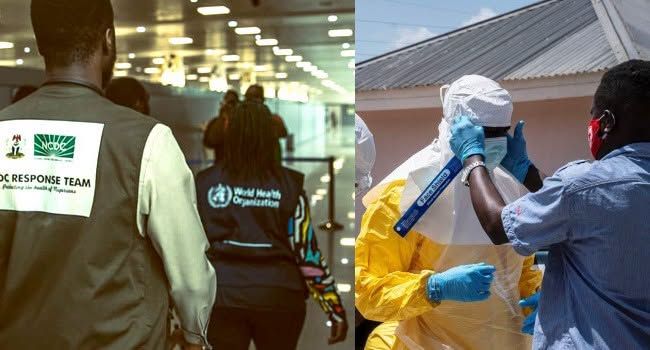
The Nigeria Centre for Disease Control and Prevention (NCDC) has identified two suspected Ebola cases in the North-East, with both individuals isolated as laboratory tests are conducted. The agency stressed that the cases are yet to be confirmed, urging Nigerians to maintain proper hand hygiene, practise good sanitation and follow official public health advisories.
Drugs Giant AstraZeneca Reveals Higher Profits, Savings Plan
AstraZeneca has reported a 23 per cent rise in third-quarter net profit to $3.12 billion, driven largely by strong cancer drug sales, while unveiling a $1.5 billion annual cost-saving programme. The British pharmaceutical giant is also expanding its research pipeline, international investments and development of a potential weight-loss treatment as it targets $80 billion in annual revenue by 2030.

NIGERIA’S INDEX EBOLA PATIENT, HUSBAND EVACUATED TO SWITZERLAND — PATE
Coordinating Minister of Health and Social Welfare, Muhammad Ali Pate, has confirmed the evacuation of Nigeria’s first imported Ebola patient and her husband to Switzerland for further care. Although the patient’s condition has improved and she is stable and conscious, Pate warned that she may still be infectious. Meanwhile, the NCDC says 53 contacts have been identified and are being monitored as public health authorities intensify containment measures.