Federal Nigerian Society For The Blind Demands Inclusive Policies For Visually Impaired Persons
The Society envisions a Nigeria where visually impaired persons can move around safely and enjoy greater independence, supported by accessible infrastructure and a more informed public.
The Federal Nigerian Society for the Blind (FNSB) has called for the formulation and implementation of policies that guarantee equal opportunities and promote the inclusion of persons with disabilities in Nigeria.
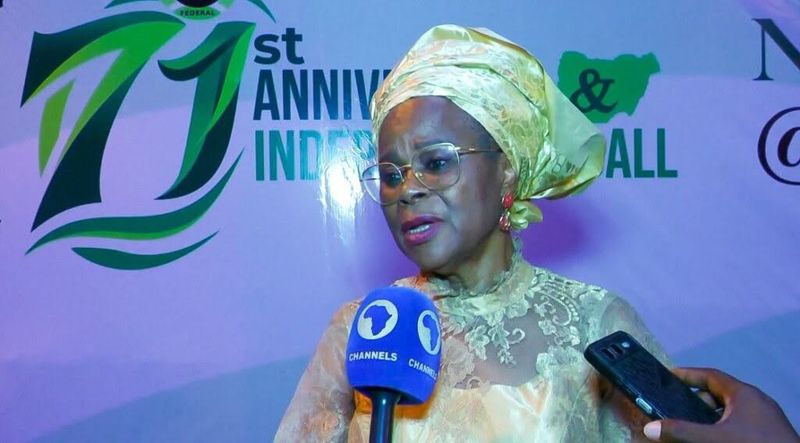
The Society’s Executive Council Chairman, Arit Tunde-Imoyo, made the call during its 71st anniversary celebration and Independence Ball in Lagos.
Tunde-Imoyo stressed the need for the effective implementation of policies designed to improve employment opportunities for persons with disabilities, recalling a policy that requires organisations to reserve five per cent of their workforce for persons with disabilities.
“We would like policies to be put in place and implemented,” he said. “So we’re looking forward to it being implemented,” Tunde-Imoyo said.
The Society’s Executive Council Chairman, Arit Tunde-Imoyo
She added that the Society envisions a Nigeria where visually impaired persons can move around safely and enjoy greater independence, supported by accessible infrastructure and a more informed public.
“We’re looking forward to an enabling environment where the visually impaired can walk without stumbling over potholes. They can cross the road where people would know that when they see a white cane, you know, this is a visually impaired person. Where people would be educated enough to know that. So advocacy continues, enlightenment continues,” Tunde-Imoyo added.
For 71 years, the Federal Nigerian Society for the Blind (FNSB) has championed advocacy and empowerment for visually impaired persons.
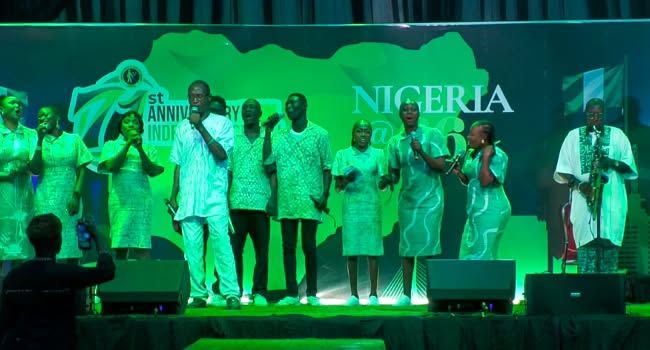
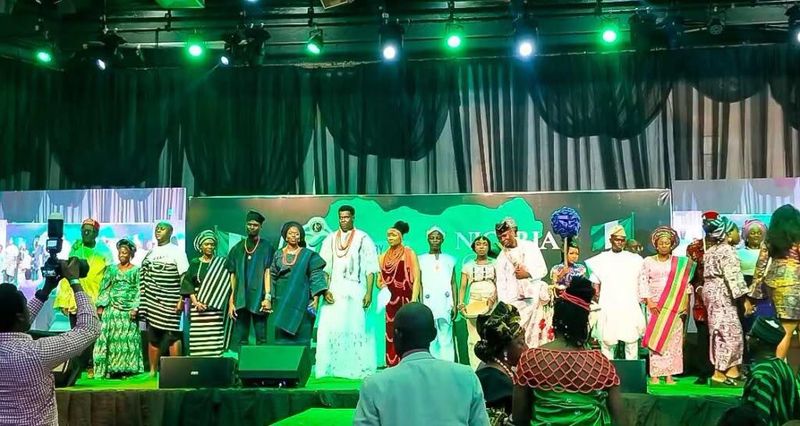
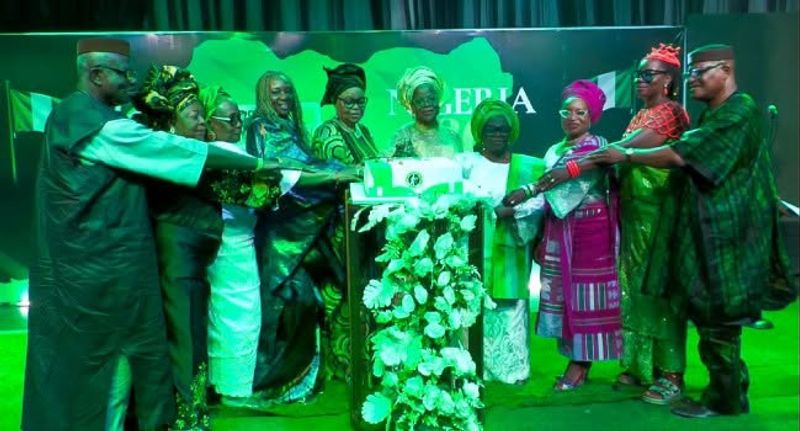
The Society’s 71st anniversary celebration and Independence Ball, held at the MUSON Centre in Onikan, Lagos, on Friday, brought together members, partners and trainees to celebrate its enduring commitment to inclusion and empowerment over the years.
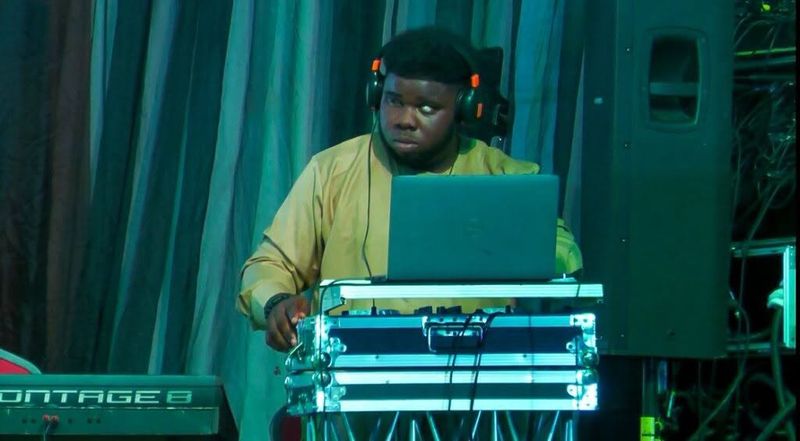
The celebration also showcased the talents and abilities of visually impaired persons, with blind and visually impaired musicians, the compere, and a DJ entertaining guests. Visually impaired models also took to the runway, showcasing Nigeria’s rich cultural diversity.
Tunde-Imoyo also highlighted the Society’s achievements and impact since its establishment in 1955.
“The Nigerian Society for the Blind was founded 71 years ago. A year later, they set up the Vocational Training Centre for the Blind in Oshodi. That is where we rehabilitate and retrain people who have gone blind.
“So we retrain them, rehabilitate them and empower them. We make them understand that disability is not the end of the road and that they can be whatever they want to be,” Tunde-Imoyo said.
“We have trainees who’ve gone on to acquire two masters after their first degree, and they’re working. We have lawyers, engineers, and so many people that we have. I think I would say that we’ve rehabilitated over 3,500 people since 71 years ago,” Tunde-Imoyo added.
For Motunrayo Apena, a trainee at the Federal Nigerian Society for the Blind, enrolling at the centre marked a turning point after she became pessimistic about life following the loss of her sight.
Apena said the experience changed her outlook, helping her discover new possibilities and develop skills that have made her more independent.
“But to the glory of God, when I got to the Federal Nigerian Society for the Blind, my orientation really changed, seriously. I discovered there’s a lot of hope after blindness. We can do more; we can even do more than what the sighted are doing.
“So, I thank God for that. The things that I couldn’t do before, like operating my phone and going out on my own, I can do them now. I can operate my phone confidently; I can go out independently with the help of my guide cane and some other things like that,” Apena said.
Apena also encouraged other blind and visually impaired persons not to allow their condition to limit their ambitions, drawing from her own experience of rebuilding her confidence after losing her sight.
“Before I came to the Blind Centre, I almost lost my confidence. I’m the kind of person who likes shakara, going out, and anything fashion. But when I became blind, I wondered how I was going to continue. I asked myself, ‘Is this still possible?’
“But when I got to this school, I realised I could do more. So, I just want to advise them: don’t think that because you’re blind, you cannot do exploits or become successful in life. No, you can do it. You can do more,” she said.
Another trainee, George Okongwu, who lost his sight after struggling with glaucoma, said enrolling at the Federal Nigerian Society for the Blind had made a significant difference in his life.
“Coming to this place has made a lot of difference to me. Everybody’s story is unique. You know, what you call a story of resilience and vision without eyes – it’s just like, you can’t compare it. Life without rehabilitation, when you have a sight challenge, is not comparable,” Okongwu said.
Drawing from his experience, Okongwu urged other blind and visually impaired persons to seek rehabilitation.
“My advice for people who have similar problems is that they just have to find a way to go for rehabilitation because it’s not imaginable. You can’t imagine it. It’s like black and white. If you don’t go through rehabilitation…” Okongwu urged.
The ceremony also recognised individuals and organisations whose dedication and philanthropic support have contributed to the Society’s growth over the years.
Meanwhile, Tunde-Imoyo called for increased support from individuals and organisations to strengthen the Society’s operations, expand its training capacity and improve access to assistive technology for visually impaired persons.
She emphasised the need for modern technological tools to enhance the quality of training offered at the centre, adding that the Society hopes to reach more people who have lost their sight.
“I must say that we need organisations and individuals to partner with us. We know that we’re in the age of technology. We need to have modern technology to be able to train properly — assistive technology, digital as well.
“We’re also looking at being able to take more people. We have the capacity to take 100 trainees a year. So, we want a situation where people who have lost their sight will know that there is a centre they can come to.
“Not just in Lagos; we want people from all over Nigeria to come to the centre and know that they’ll be taken care of,” Tunde-Imoyo said.
For more than seven decades, FNSB, a voluntary, non-governmental organisation, has remained committed to improving the lives of blind and visually impaired persons.
As it continues its work, the Society’s mission reinforces a powerful message: visual impairment should never define a person’s potential or limit their opportunity to live an independent, fulfilling life.