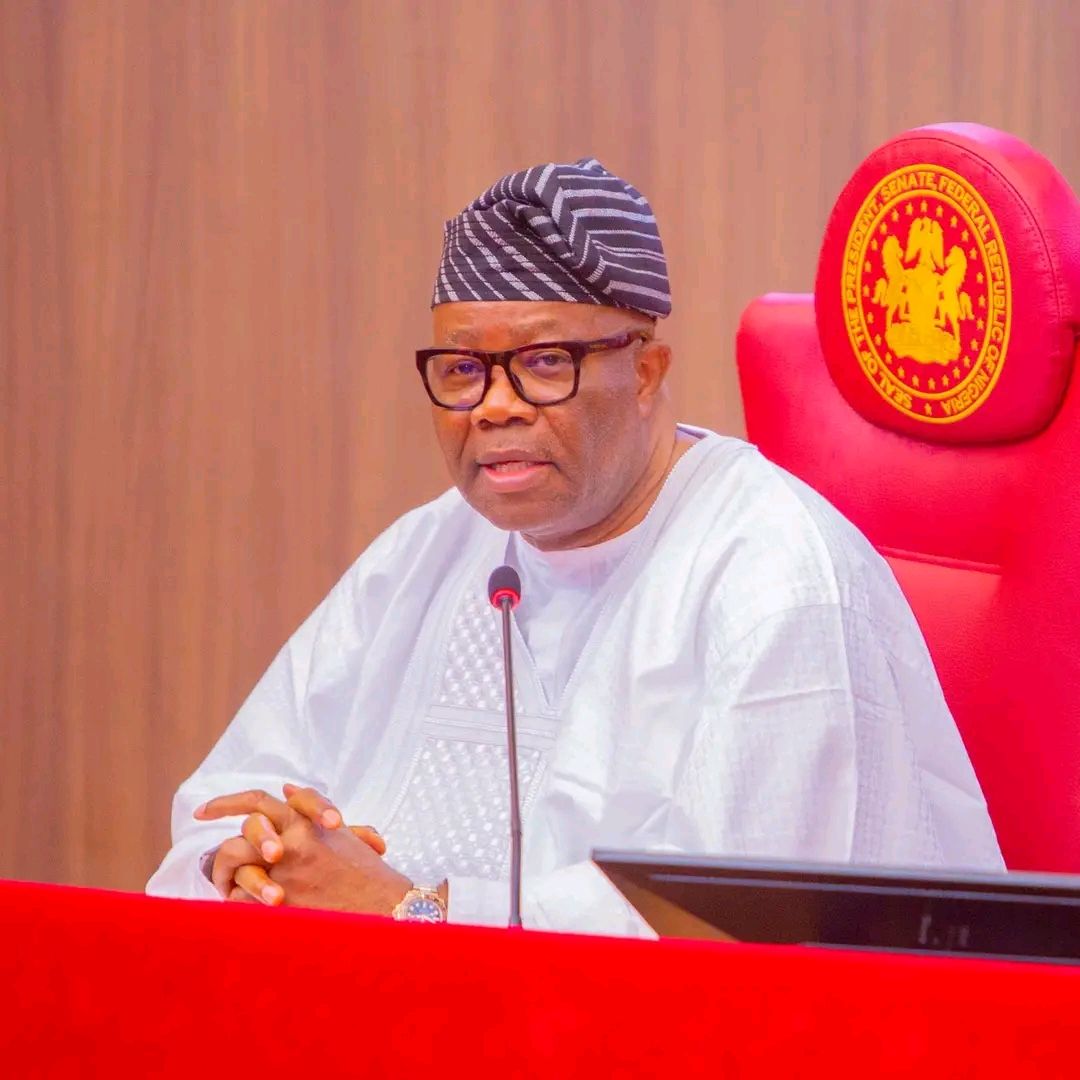
Senate President Godswill Akpabio has stated that Nigerians were once willing to pay as much as ₦10,000 per litre for fuel due to severe scarcity, emphasizing that such a crisis has been avoided under the current administration. His remarks come amid ongoing national conversations about fuel pricing and economic hardship.
Speaking on the state of petroleum supply, Akpabio argued that while fuel prices may appear high, availability has significantly improved compared to previous periods marked by long queues and widespread shortages. According to him, scarcity at the time created desperation among citizens, driving the willingness to pay extreme prices.
The Senate President noted that since the present government assumed office, fuel has remained consistently available across the country. He credited this stability to reforms in the petroleum sector, which he said have helped eliminate the bottlenecks that previously disrupted supply chains.
His comments have sparked mixed reactions among Nigerians, many of whom continue to grapple with the rising cost of living. While some acknowledge the relative ease of accessing fuel, others argue that affordability remains a major concern, as higher pump prices continue to impact transportation and basic goods.
Economic analysts have pointed out that the removal of fuel subsidies played a key role in stabilizing supply, even though it also led to a sharp increase in prices. They explain that the previous system often encouraged hoarding and black-market activities, which contributed to artificial scarcity.
Critics, however, maintain that the government must do more to cushion the effects of fuel price increases on ordinary citizens. They argue that improved availability alone is not sufficient if many Nigerians cannot afford the product at current rates.
The debate highlights the broader challenges facing Africa’s largest economy, where balancing market reforms with social welfare remains a delicate task. Fuel pricing continues to be a sensitive issue, given its direct impact on transportation, food prices, and overall inflation.
Despite the criticisms, Akpabio insisted that the current situation represents progress, stressing that a market-driven system ensures sustainability and prevents the kind of shortages that once crippled daily life. He reiterated that the government remains committed to policies aimed at long-term economic stability.
As discussions continue, many Nigerians are watching closely to see whether further measures will be introduced to ease the financial burden while maintaining steady fuel supply across the country.