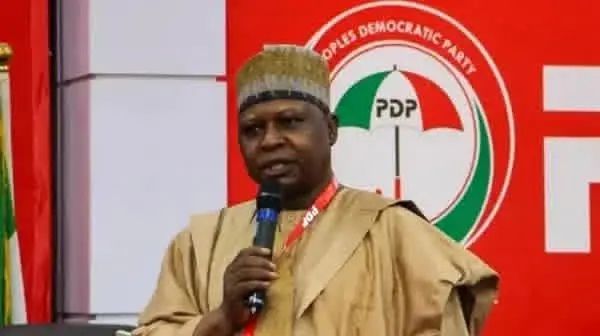
Nigeria’s political landscape witnessed another major development as the Supreme Court nullified the convention organized by the faction of the Peoples Democratic Party (PDP) led by forme acting chairman, Umar Turaki. The apex court ruled that the convention held in Ibadan failed to comply with constitutional provisions guiding the party’s internal processes, thereby rendering all decisions and appointments arising from the gathering invalid.
The judgment, delivered on Thursday, marked a significant victory for the opposing faction within the PDP that had consistently challenged the legitimacy of the Ibadan convention. According to the court, political parties must strictly adhere to their constitutions and established procedures when conducting conventions and electing party officials.
The legal battle over the controversial convention had deepened divisions within the opposition party for months, with both camps laying claim to the authentic leadership structure of the PDP. The dispute created uncertainty over the party’s direction ahead of future political activities and elections.
In its ruling, the Supreme Court emphasized that internal democracy remains a critical pillar in the operation of political parties in Nigeria. The justices noted that any deviation from laid-down rules threatens the integrity and stability of party administration.
Supporters of the Turaki-led faction expressed disappointment over the judgment, insisting that the convention was conducted in good faith and reflected the will of delegates who attended the gathering in Ibadan. However, they acknowledged the authority of the Supreme Court as the final arbiter in legal disputes.
On the other hand, members of the rival faction celebrated the verdict, describing it as a triumph for justice and party discipline. They argued that the decision would help restore order and unity within the PDP after months of internal wrangling and leadership disputes.
Political observers believe the ruling could reshape the balance of power within the opposition party, as stakeholders may now be compelled to return to the negotiating table to resolve lingering divisions. Analysts also warn that continued infighting could weaken the PDP’s chances in future electoral contests.
The judgment is expected to trigger fresh consultations among party leaders, elders, and governors who have been working behind the scenes to prevent a complete breakdown of the party structure. Many are now calling for reconciliation efforts to rebuild trust among aggrieved members.
Legal experts have also described the verdict as another reminder that courts will continue to play a decisive role in resolving disputes arising from party conventions and leadership tussles in Nigeria’s political system. They stressed the importance of transparency and compliance with party constitutions.
As reactions continue to trail the Supreme Court decision, attention is now focused on the next steps the PDP leadership will take to stabilize the party and prevent further fragmentation. The ruling may ultimately determine the future direction of one of Nigeria’s major opposition parties ahead of upcoming political battles.